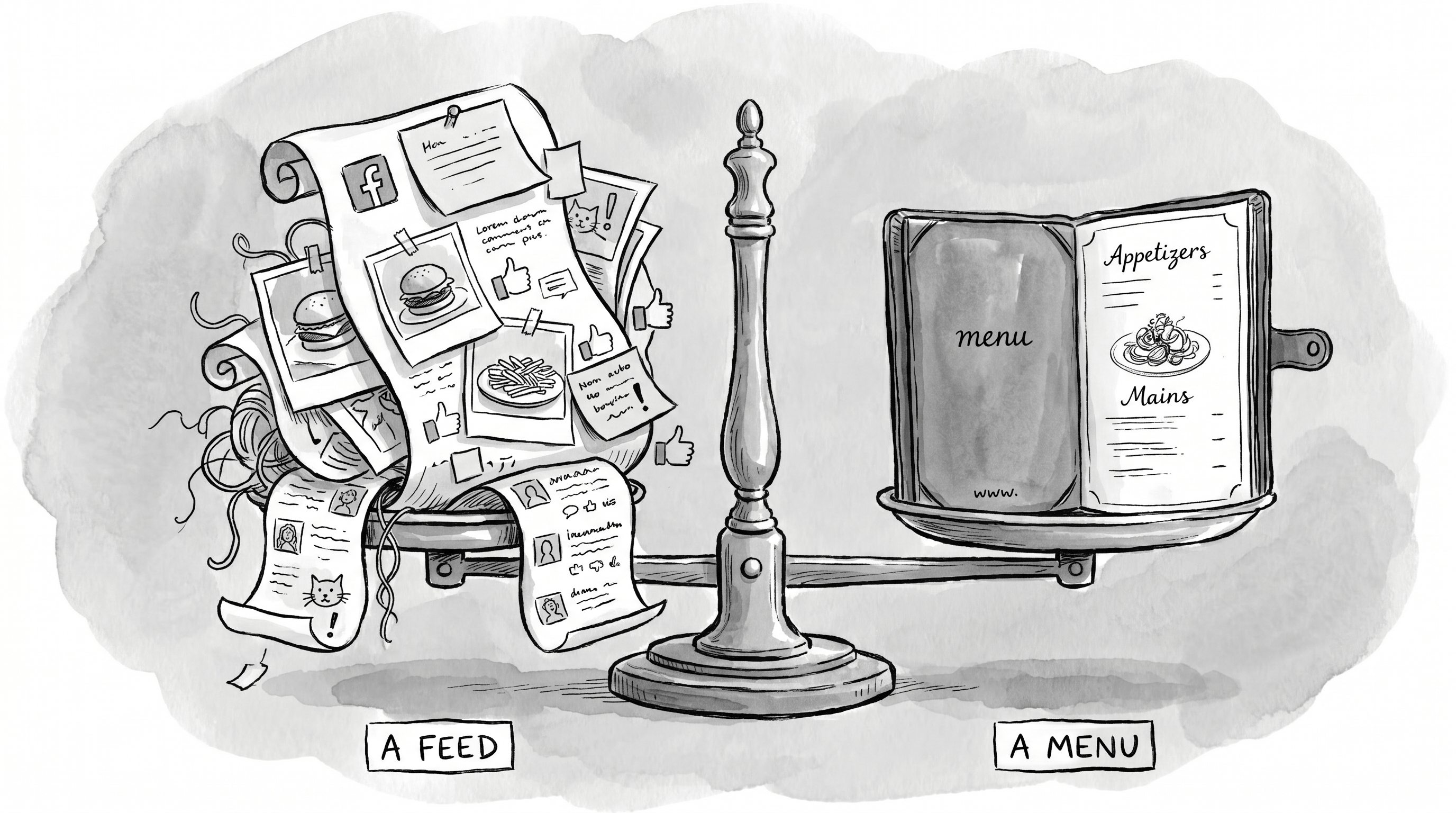
Plenty of restaurants still treat their Facebook page as their website. It's free, it was already there, and setting up a proper site feels like one more thing to do. The catch is that a Facebook page isn't really yours. It's a rental agreement, and Meta can change the terms whenever it likes.
You don't own your Facebook page
This isn't theoretical. When Facebook rewrote its News Feed algorithm in early 2018 to favour "meaningful interactions" between friends, organic reach for business pages dropped sharply almost overnight, and a lot of restaurants who had spent years building an audience watched their posts stop appearing. More recently, Instagram has quietly deprioritised posts that link off-platform, so every menu update that points at your booking system reaches fewer people than the same update with no link would.
Your own website doesn't behave like that. A page you published in 2019 is still there, still ranking, still bringing traffic. You decide what's on it.
What Google ranks
Type "italian restaurant near me" into Google and look at the results. You'll see websites, a Google Business profile or two, and maybe a map. You won't see a Facebook page. Meta's pages are technically crawlable but almost never rank competitively for the searches that matter.
If you want to be found by a diner searching for your kind of food at 6pm on a Friday, you need a page Google will actually rank: a site with your own domain, clean URLs, proper headings, and structured data about what you serve.
First impressions before anyone turns up
When someone is deciding whether to book, they usually do a quick check. They look at the menu, they look at a couple of photos of the room, and they look for signs the business is still being actively run. A website with a current menu and a dated blog post from last month reassures them on all three counts. A Facebook page whose last post is a Christmas opening-hours reminder from 18 months ago does the opposite.
The point isn't that a website has to be beautiful. It has to look like somewhere that's open.
A menu that's actually readable
Social feeds weren't designed for menus and it shows. Photos of printed menus go blurry when zoomed, screenshots don't adapt to the phone they're opened on, and carousel posts are a terrible way to compare starters to mains.
A proper menu page can do things a feed simply can't. It can filter dishes by allergen, show dietary tags next to each item, present prices in a way you can scan, update in real time when something sells out, and expose structured data so voice assistants and AI tools can answer questions about what you serve.
Data you can actually use
Meta's analytics are vague on purpose. You get engagement metrics that swing around without telling you what's working.
A website, even a simple one with Plausible or GA4 plugged in, will tell you which menu items people actually looked at, what day of the week your traffic peaks, and whether the QR code on Table 6 is doing anything. That's the sort of information you can run a restaurant with.
Social media is still useful for reminders, photos of the dessert special, and replying to regulars. It's a channel. It isn't a home. If you want a place on the web that works for you, and keeps working when the next algorithm change lands, it has to be one you own.